
The True Cost of Ownership: Why Extended Wear Life Is a Strategic Business Advantage
In the high-stakes environment of bulk materials handling, the real price of conveyor components isn't what you pay upfront—it's what you spend over time, and what you lose to inefficiency.
For maintenance managers and contractor suppliers across Australia's mining sector, the calculus of Total Cost of Ownership (TCO) has shifted dramatically. With margins under pressure and operational uptime at a premium, the industry is moving beyond simple procurement metrics toward lifecycle value assessment. At FM8, we've engineered our Primary and Secondary conveyor belt cleaning blades—particularly our Super XHD series and FM8-P Knife Tip blades—to address this fundamental business reality.
The Hidden Cost of Carryback
Carryback—the material that adheres to conveyor belts after discharge—represents one of the most underestimated operational costs in bulk handling. Industry research indicates that carryback can be responsible for the waste of up to 3% of total bulk material production if left uncontrolled . In a 40-conveyor coal handling operation, a mere 2% difference in scraper efficiency can result in 10,876 tons of additional material on the floor annually—with cleanup costs alone reaching significant six-figure sums depending on labour rates .
But the financial impact extends far beyond housekeeping. When carryback accumulates on return rollers and pulleys, it creates a cascade of consequential damage:
Idler and Pulley Degradation
Material buildup on return idlers causes uneven rotation, increased friction, and premature bearing failure. Carryback that reaches pulley lagging accelerates wear and creates imbalance, leading to premature failure of pulley lagging, belts, idlers, and bearings . In one documented case, a cement plant experienced snub pulley lagging life improvement from 7 months to 12 months simply through improved carryback control .
Belt Damage and Misalignment
Excessive carryback wears belts faster from the bottom up and causes tracking issues. A steelworks plant documented belt tracking issues reducing from 120mm to 40mm after addressing carryback, eliminating material spillage and structural damage to return side components. Belt life improvements from 12-14 months to 16-18 months have been recorded in coal washery applications following carryback reduction initiatives .
Roller Consumption
Perhaps most tellingly, a steelworks plant reduced roller consumption from 5-6 units per month to 1-2 units per month on a specific conveyor through improved carryback management . At current idler costs—ranging from $20-$500 per unit depending on specification—these reductions translate to thousands in direct savings per conveyor annually .
The FM8 Engineering Advantage
Our approach to TCO reduction centres on material science innovation and rapid operational readiness—two factors that directly compress maintenance intervals and extend component life.
Super XHD Series: Quantified Durability
In a recent deployment in the Bowen Basin, FM8 Super XHD blades demonstrated 40% longer service life compared to standard alternatives, with specific lifespan improvements ranging from 45% to 118% depending on application severity. These aren't marginal gains—they represent fundamental shifts in maintenance scheduling. When blade changes move from monthly to quarterly intervals, the savings multiply across labour allocation, production downtime, and inventory carrying costs.
Primary and Secondary Blade Integration
Our blade systems are engineered to work in concert. While primary blades handle the bulk of material removal, secondary blades address residual fines. This staged approach reduces the abrasive load on downstream components and maintains belt cleanliness across the entire return circuit—protecting idlers, pulleys, and the belt itself from the grinding paste that carryback creates.
Calculating True TCO
When evaluating conveyor belt cleaning solutions, we encourage maintenance managers and procurement professionals to model the full cost equation:
Direct Costs:
- Blade purchase price
- Installation labour (frequency × hours × rate)
- Inventory management and storage
Consequential Costs (the hidden majority):
- Carryback cleanup labour and equipment
- Idler and pulley replacement frequency
- Belt repair and replacement intervals
- Unplanned downtime from component failure
- Material loss value
- Safety incident costs from spillage-related hazards
A blade system costing 20% more upfront but delivering 40% longer wear life and 20% better cleaning efficiency typically generates positive ROI within weeks, not months—particularly in high-value material applications where carryback represents direct product loss.
The Contractor Supplier Opportunity
For contractor suppliers, specifying FM8 blades offers a compelling value proposition to end clients. By delivering quantifiable reductions in maintenance labour and component consumption, contractors can differentiate on operational efficiency rather than commodity pricing. The ability to demonstrate extended idler life, reduced belt damage, and lower cleanup requirements strengthens client relationships and supports premium service positioning.
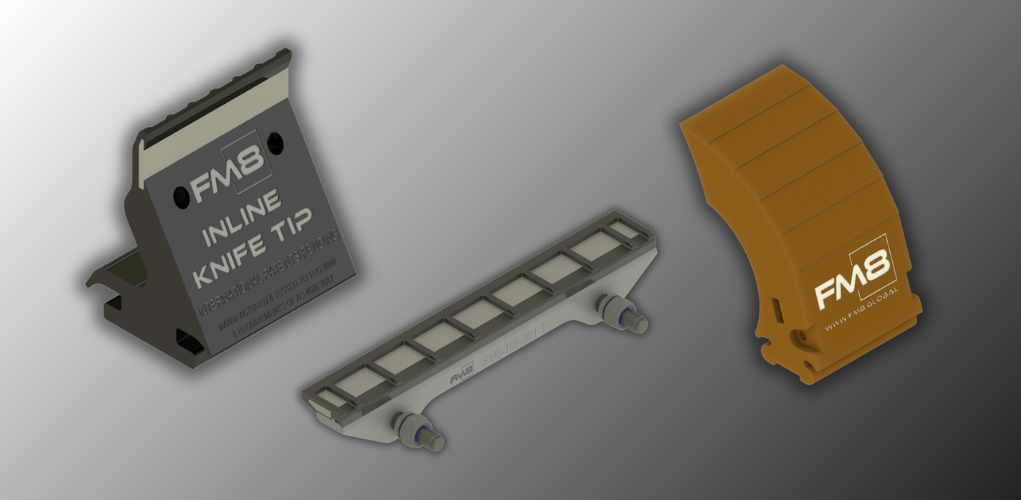
In an industry where every hour of uptime counts and every dollar of cost is scrutinised, the strategic advantage belongs to operations that look beyond purchase price to lifecycle value. FM8's engineered wear solutions—backed by documented performance in Australian mining conditions—transform conveyor belt maintenance from a reactive cost centre to a controlled, predictable operational variable.
The question isn't whether you can afford premium blade technology. It's whether you can afford the alternative.
Contact us to discuss TCO modelling for your specific conveyor configuration.
FM8 Pty Ltd. Engineered to Exceed.