
The Hidden Cost of Poor Packaging: Why Your Polyurethane Blades Are Failing Before They Even Hit the Conveyor
At FM8, we don't just engineer polyurethane cleaning blades. We engineer certainty.
The Australian mining industry has a polyurethane problem that nobody talks about. While operators obsess over tensile strength and abrasion resistance during procurement, a silent killer is already at work—long before blades ever touch a conveyor belt.
The Chemistry of Failure
Australian polyurethane suppliers predominantly formulate conveyor cleaning blades using polyester blends. While these materials offer excellent mechanical properties for primary and secondary cleaning applications, they harbour a critical vulnerability: hydroscopic degradation.
The science is unambiguous. Polyester-based polyurethanes absorb moisture from ambient humidity, triggering hydrolytic degradation that attacks the ester linkages in the polymer backbone . Research demonstrates that at 40°C and 95% relative humidity, polyester urethanes experience significant tensile strength loss within weeks, while polyether alternatives show minimal degradation.
But here's what the data sheets don't tell you: degradation begins the moment blades leave the factory.
The Double Warehouse Problem
The supply chain for polyurethane blades creates a compound risk that most operators never consider. When blades are stored in a supplier's uncontrolled warehouse environment — exposed to ambient humidity, temperature fluctuations, and UV exposure through skylights or open loading bays — the hydrolytic degradation process begins immediately. Moisture absorption starts at the surface and penetrates inward, compromising the polymer structure day by day.
Then the blades are delivered to the end user's site, typically into another uncontrolled environment: open-sided sheds, shipping containers with condensation issues, or storage yards with direct sun exposure. This second phase of environmental assault accelerates the damage already initiated. The polyurethane continues absorbing atmospheric moisture, UV radiation breaks down surface polymer chains, and the material's mechanical properties deteriorate progressively.
By the time these blades reach the installation point, their service life has been significantly compromised. What should deliver months of reliable cleaning performance instead fails prematurely—blades break under operational load, disintegrate during installation, or crumble away within weeks of contact with the conveyor belt. The end user hasn't just lost blade performance; they've lost maintenance scheduling predictability, conveyor efficiency, and operational uptime.
In humid mining regions — Bowen Basin, Hunter Valley, Pilbara wet seasons — this double warehouse exposure creates a perfect storm for material failure. Studies confirm that polyester urethanes exhibit "volume swell and property reduction" when exposed to humidity. UV exposure compounds this degradation.
The result? Premature blade failure. Reduced cleaning efficiency. Unplanned shutdowns. And a replacement cycle that hits your maintenance budget long before it should.
How to Spot Degraded Polyurethane
There's a simple field test that reveals whether your blades have already suffered environmental damage. Degraded polyurethane exhibits distinct visual and tactile changes:
Appearance: The surface appears chalky or develops a cheesy, waxy texture — particularly on exposed edges or surfaces that have seen UV exposure
Tactile check: Press the blade surface with a fingernail. Degraded material will feel noticeably softer and may indent easily, lacking the resilient "bounce-back" of properly stored polyurethane
Consistency: Look for surface cracking, crazing, or a powdery residue when handling the blade
If your blades arrive showing these characteristics, the damage is already done. No amount of careful installation will restore the original mechanical properties. You're fitting a blade that's destined to underperform.
The Industry Standard: A Compromise You Didn't Agree To
Most suppliers ship polyurethane blades in basic packaging — often open pallets or thin plastic wrap — exposing them to humidity and UV from the moment they leave the warehouse. It's an accepted industry practice that assumes degradation is inevitable. At FM8, we reject that assumption.
The FM8 Difference: Engineered to Exceed
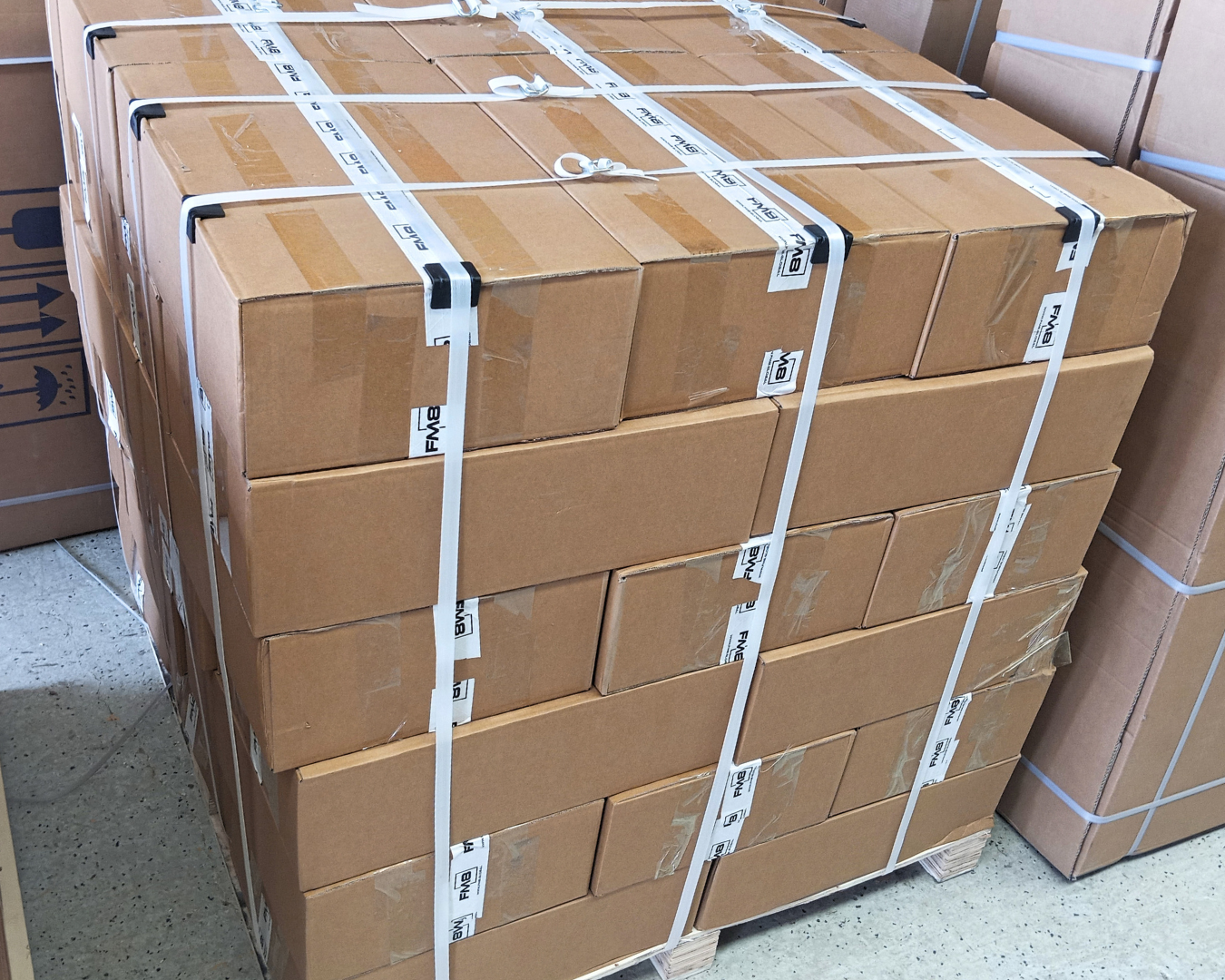
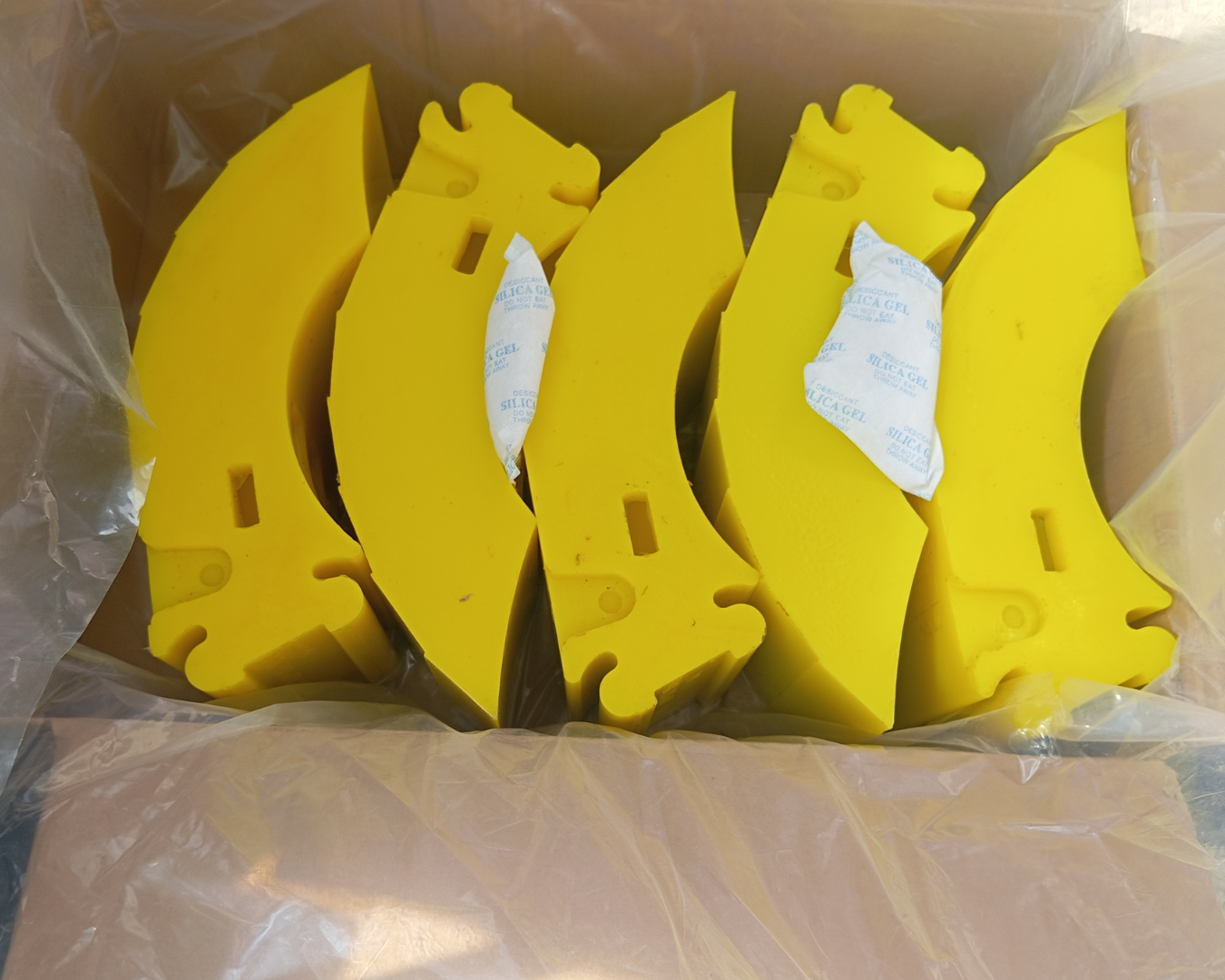
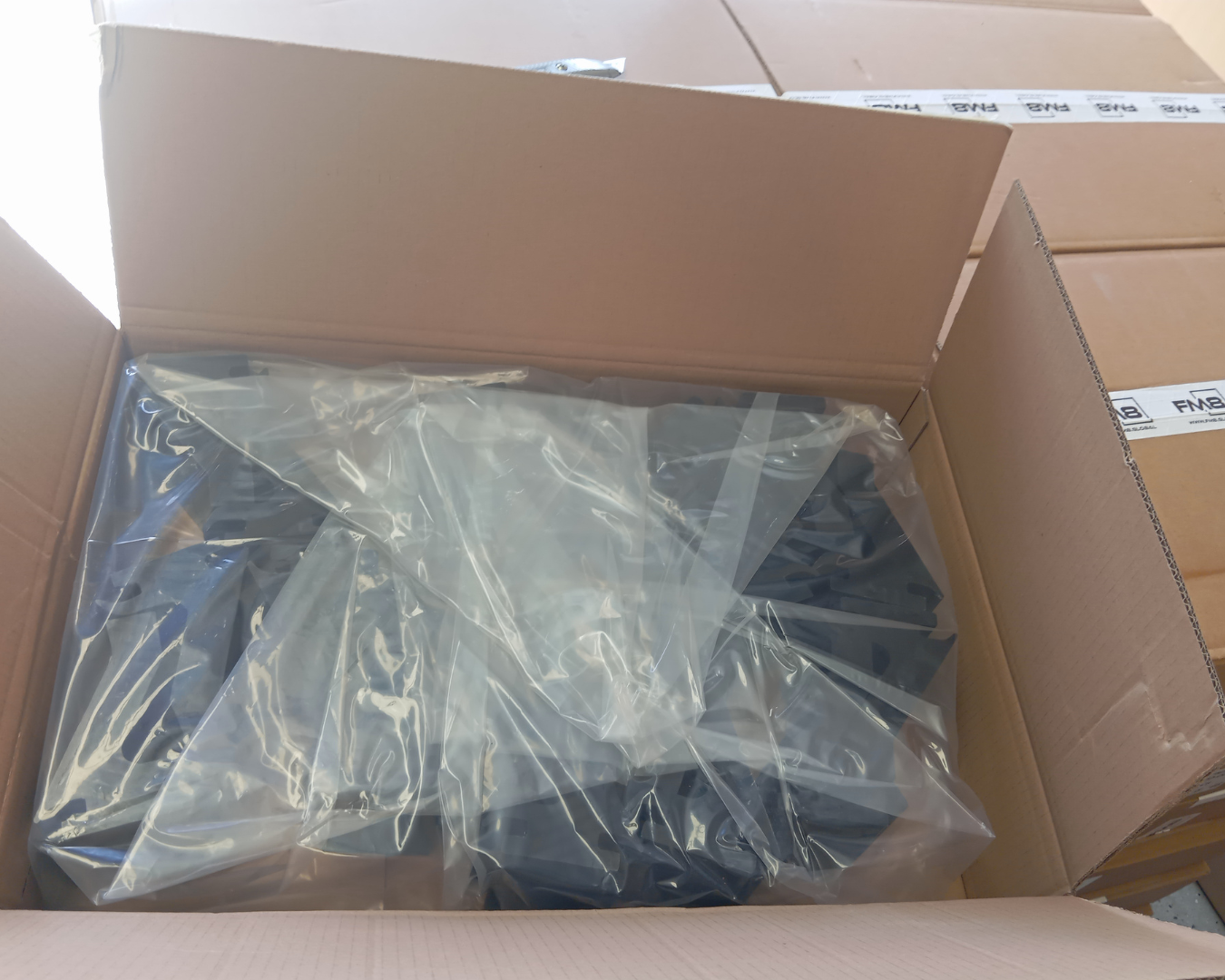
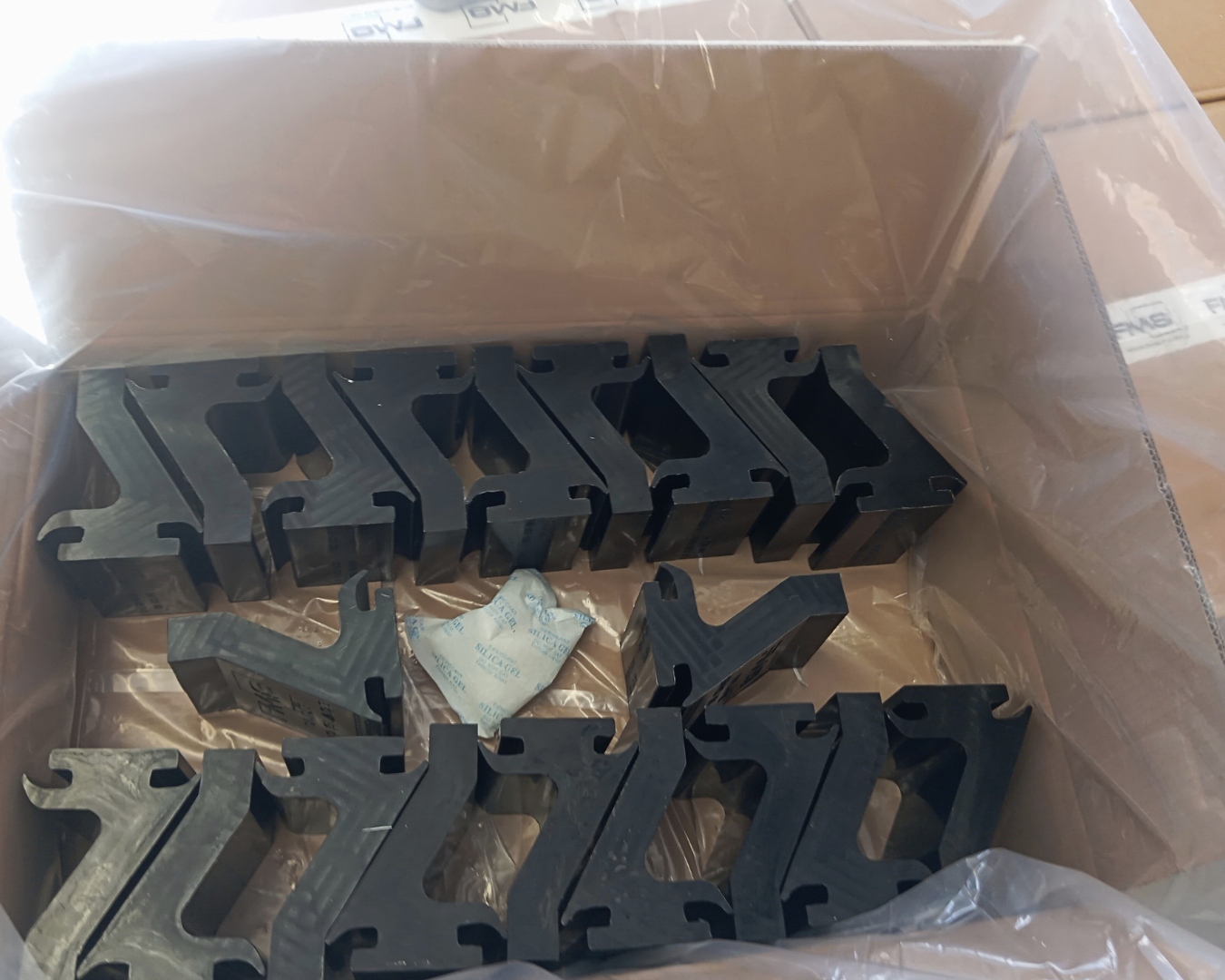
Every FM8 polyurethane cleaning blade — primary and secondary — is shipped in purpose-designed heavy-duty cardboard cartons engineered for stable stacking and warehouse efficiency. More critically, each carton features a heavy-duty internal plastic lining creating a moisture barrier, accompanied by desiccant or silica gel packs that actively absorb residual moisture.
This isn't premium packaging. It's essential engineering.
By maintaining near-zero moisture content during storage and transit, FM8 blades arrive at site with the exact mechanical properties specified—tensile strength, tear resistance, and abrasion characteristics preserved from the moment of manufacture. No chalky surfaces. No cheesy texture. No fingernail-test failures. No breakages during installation. No disintegration under operational load.
In humid environments like Bowen Basin operations, where ambient relative humidity regularly exceeds 75%, this protection isn't a luxury. It's a performance guarantee. FM8's sealed packaging system with desiccant control eliminates this exposure window, ensuring that hydrolytic degradation never begins.
Your Conveyor Deserves Better
Conveyor cleaning efficiency depends on blade integrity. Blade integrity depends on material stability. And material stability, for polyurethane systems, depends on environmental protection from factory to installation.
At FM8, we don't expect our customers to accept degradation as standard. Our packaging standards reflect what "Engineered to Exceed" actually means: anticipating failure modes that others ignore, and engineering solutions that eliminate them.
Ready to eliminate premature blade failure from your maintenance schedule? Reach out to your FM8 distributor or contact our technical team directly at info@fm8.global.